


The Only Joby Aviation Deep Dive You Will Ever Need!
- The Hustle Brothers

- Feb 24
- 6 min read
Joby Aviation ($JOBY) is spearheading the UAM industry with its electric vertical takeoff and landing (eVTOL) aircraft the S4, aiming to revolutionize short-haul travel.
They were founded in 2009 and are a Santa Cruz-based company that transitioned from stealth development to a public entity via SPAC in 2021.
Fast forward to today they now holds a market cap of approximately $12.1 billion.
As a vertically integrated leader (the only in the space, from my knowledge), Joby manages aircraft design, manufacturing, operations, and ride-sharing integration.
(I like to say Joby = Apple / Archer = Android)
I will try my hardest to break this down as simple as possible for both new and seasoned Air taxi investors. I will cover Joby's evolution, technology, alliances, finances, and trajectory which is essential for investors and aviation lovers that are eyeing up this flying taxi era.

Company Overview and History
Joby Aviation is led by the man himself, JoeBen Bevirt. They focus on quiet, electric aircraft for urban flights ferrying passengers on trips that would usually take 1hour in a car, delivering them in 10/15mins. (and we will meet the S4 in a bit).
After years in stealth, Joby went public and has since achieved key milestones (Let me mention some of my favourite):
Joby acquired Uber Elevate in 2020 for software enhancements where they now are going to utilise this booking system as their own "Elevate OS app".
Last year, Joby also aquired Blade Urban Air Mobility (who are an established helicopter service) for operational experience with around 40,000 passengers flown and are now generating revenue as an air taxi service, however as we speak, Blade rents 24 helicopters which will be switched for S4 Air taxi's once FAA Approval is achieved.
Joby also delivered their second aircraft to the U.S. Air Force in 2025 highlighting their presence not only as a commercial operator but a defensive asset too. (we are awaiting feedback on this)

Joby flew in various Airshows in 2025 including Osaka in Japan and Salinas airshow demonstrating the S4's flying capability to the public. The S4 was also present at Austin F1 Gran Prix for the public to get up close and view the interior of the craft.
The company targets passenger operations in mid to late 2026, bolstered by significant investments and global demonstrations (I am hoping myself for Q3 roll out).
In reality 2025 was a massive year for the company, Joby logged over 850 flights, amassing 9,000 electric miles and 7,000 autonomous miles across three countries. This is by far the most flight time of any evtol company and the company has been able to demonstrate a task that others have been struggling to achieve (The dreaded vertical take off and transition to horizontal flight to then transition and land just like a helicopter again.)
Technology and Aircraft
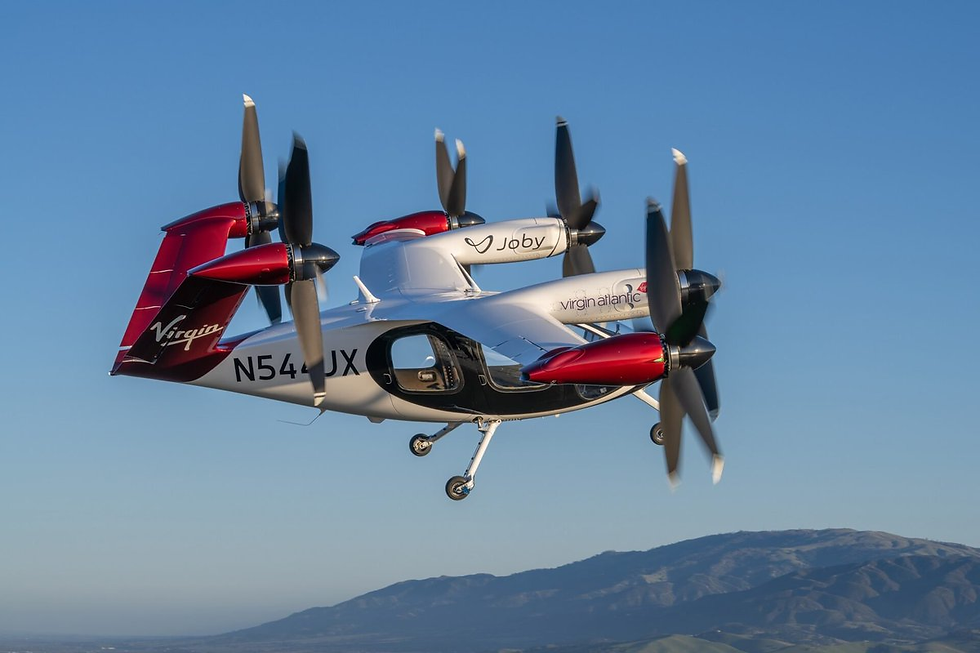
Meet Joby's eVTOL, the S4 which accommodates four passengers and a pilot, boasting a 150-mile range on a single charge and whopping 200 mph speeds. Its six-propeller design ensures quiet operation (they are 100 times quieter than helicopters) which is ideal for noise pollution worries in cities.
Joby have their proprietary propellers being produced in Dayton, Ohio, while they are currently adding more CAE simulators for FAA-qualified pilot training (the first was delivered in January 2026).
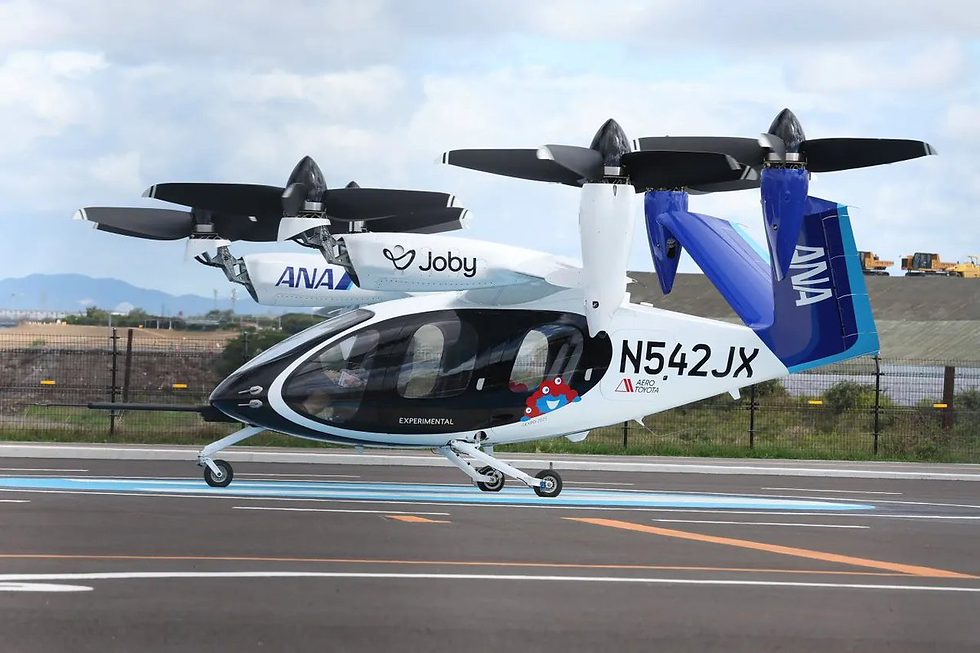
The next phase of the business includes utilising NVIDIA's IGX Thor platform for autonomy. The "Superpilot" autonomous system is under testing, paving the way for unpiloted flights on all fronts including passengers operations, military craft and cargo missions.
On the cargo operations side, they have just been approved to test various radio frequencies for their redundancy communication system on these autonomous cargo S4 (please note guys, this cert is only for testing and not with passengers on board)
As of this January, Joby has emphasized rigorous testing, including simulated failures and extreme conditions, to exceed operational demands which show instil confidence in their design.
Key Partnerships and Collaborations
Joby's network drives scalability and for that this requires big backers with even bigger experience.
Step in Toyota, the automotive Juggernaut, who committed an additional $250 million in 2025 for manufacturing, with alliance finalization ongoing.

Delta Air Lines another main partner of Joby's enables premium transfers, Uber integrates services, and Virgin Atlantic targets UK launches.
A December 2025 partnership with Metropolis Technologies plans 25 U.S. vertiports. (and for anyone that is not aware, these are like mini airports or bus stops for evtols)
Going Internationally, Dubai grants exclusive six-year rights, with the first vertiport at Dubai International Airport slated for Q1 2026 and launches by Q3 2026. Saudi Arabia's MoU eyes pre-commercial flights in H1 2026.
L3Harris is one of my favourite collaborations though. As a prime defence contractor this collaboration explores defense VTOL applications, with demonstrations planned for 2026. These ties have secured over $1 billion in potential sales. (And I cant even project how many contracts can be secured with the DOD going forward.)

Regulatory and Certification Progress
Lets get this clear, Joby are by far the furthest ahead in regards to FAA certification.
Lets speak about how they are leading though, Joby entered the Type Inspection Authorization (TIA) phase in Q3 2025. Power-on tests on the first conforming aircraft are complete, with FAA pilots set for "for-credit" flights soon, targeting full certification in 2026. (I am projecting Q3 myself)
It aligns with the U.S. DOT's Advanced Air Mobility National Strategy and qualifies for the eVTOL Integration Pilot Program (eIPP) starting in 2026 (we will get confirmation of Jobys participation next month, but I am 99.9% certain they will be included).
Globally, Dubai demonstrations and Saudi MoU support launches by late 2026 (Q3 has been the target set by Joby).
Manufacturing and Operations
Joby is scaling aggressively.
In January 2026, it acquired a 700,000+ square-foot facility in Ohio—its second there—to double capacity to four aircraft per month by 2027. This second facility now gives the the largest potential manufacturing capacity in the evtol space, now eclipsing Archer Aviation's Arc manufacturing facility in Covington Georgia. Joby have now recently upped their manufacturing target to x4 aircraft per month in 2027.

Vertical integration, aided by Toyota, controls costs. Operations via Blade provide real-world data, with Dubai as the initial commercial hub, followed by the U.S. and others.
(It wouldn't surprise me to see a middle east manufacturing facility in the not so distant future)
Financial Analysis
Joby is pre-commercial revenue but earned $22.57 million in Q3 2025 from Blade and defense, which is up significantly year-over-year (surprise, surprise).
Q3 net loss was $401 million, driven by non-cash items. Full-year 2025 cash use is on track for $500–540 million.
Cash and investments stood at $978 million end ofQ3, which was bolstered by a $576 million equity offering, yielding $1.55 billion liquidity.
The stock rose an impressive 62.4% in 2025 but dipped post this offering.
You know I hate analyst ratings but here you go, analysts' consensus is Hold, with an average 1-year target of $13.43 (range $8–$22). (my own price target is $30 in 2026)
Joby does have a high valuation as we speak though (14x price-to-book) which does attracts shorts, but supporters like Cathie Wood who has recently loaded up a nice position has highlighted long-term potential of Joby.
Market Potential and Competitors
The eVTOL market may hit $1 T by 2040, disrupting urban transport. Joby eyes up a massive chunk of this space with their time saving air taxis.
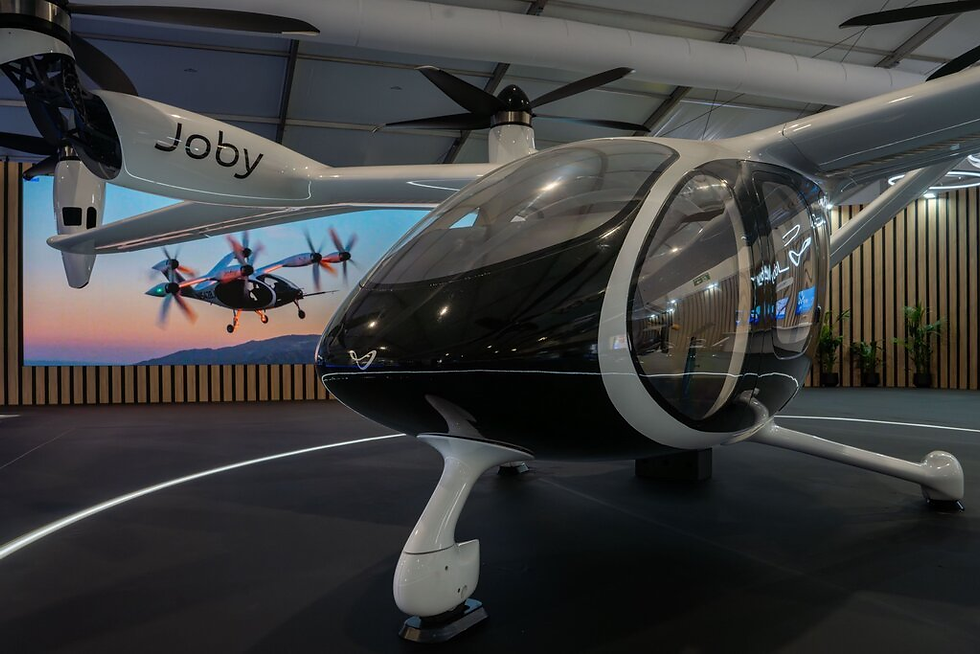
Competitors: Archer ($ACHR) focuses on asset-light models but trails in certification (target 2028 vs. Joby's 2026)
Vertical Aerospace ($EVTL) and EHang ($EH) lag in U.S. progress.
Joby's edges: $1.55B liquidity, FAA lead, and robust partnerships.
Joby are the only company going for the complete in house vertical integration approach which has long term potential as being the most profitable, however could be slower to get going.
Risks and Challenges
I ain't going to lie, this space is risky.
It won't surprise you that because Joby is speculative in nature, it naturally brings cash burn, dilution (e.g., $576M offering), and potential delays.
Valuation scrutiny also does invite shorts especially because this is an unproven market with public adoption, infrastructure, and economic factors which do pose threats.
However liquidity does provide a runway through 2026 which will get us to some serious revenue pending FAA approval.
Future Outlook
Let be real guys, 2026 is transformative.

FAA certification completion, Dubai launch, Saudi pre-commercial flights, and Ohio manufacturing expansion. (Throw in a military contract or another big deal and we are well on the way)
Analysts do foresee revenue growth, potentially sparking 50%+ stock gains on milestones. Long-term, 200%+ upside if eVTOLs succeed, demanding patience. (but who cares what the analysts thinks)
I'm sticking with my $30 price target and I am accumulating heavy right now.
Conclusion
Joby Aviation is architecting tomorrow's travel with superior progress in certification, a strong balance sheet, and worldwide partnerships.
I think $JOBY is set for ascent in 2026, however high rewards entail risks. Conduct due diligence and consult advisors. (because I certainly ain't one)
Feedback, critiques, or supplements appreciated!
Comments